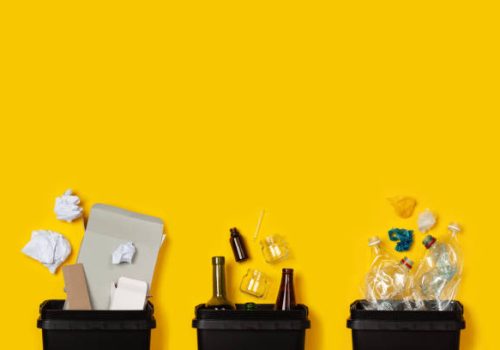
A possible future of Earth’s plastic pollution by 2040
Consider other global challenges like climate change and ozone depletion. Researchers have matured around these issues, allowing them to determine where the gases responsible for these problems originate from and how much of it reaches the air each year.
We know very little about plastic pollution. This is especially true in countries with low or middle incomes. We are struggling to reduce the amount of litter in the environment.
In our research published in Science, we made a huge effort to track plastics and predict their future flow into land and water bodies around the world. Our study found that the amount of plastics entering the marine environment will double by 2040. If the world does not act, over 1.3 billion tonnes of plastic waste will end up on land and water bodies.
We have also found out how to best reduce plastic pollution by identifying and analyzing the production and distribution of this litter. We also found unsung heroes who are fighting corruption on the frontlines. They could be the best hope for the world to stem the tide.
The consumption of single-use plastics has increased since the outbreak. Fevziie/Shutterstock
Plastic pollution in the world, a number’s view
We created a model named Plastic to Ocean (P2O) that combines decades of knowledge about global plastic flows. It compares the current production, management, and use of waste to what is expected in the future.
Burn your waste in a garden or on the street? Do you throw it in the river? You may be one of 5.5 billion people who have their waste collected. What would you do if you were one of the two remaining billion people? You could use a stream or cliff edge nearby, or you might even hide a bag of waste in the forest after dark.
Uncollected plastic is often burned as an inexpensive and efficient method of disposal. Our model predicts that by 2040 more than 2.2 million tonnes of plastic waste will be burned in the open, far exceeding the 850 millions tonnes expected to be disposed on land, and the 480,000,000 tonnes estimated to be disposed in rivers and oceans.
After tracking the origins of plastic items and their fates in the environment, we looked at what could help reduce aquatic contamination. The single most effective way to minimize marine pollution is by providing a service to the two billion people who do not currently have their waste collected.
However, none of the nine interventions that we tested solved the problem by themselves. Success could only be achieved by an integrated approach, which includes not just increasing the collection coverage but also interventions like reducing demand for non-recyclable and single-use plastics and improving the economic case for mechanical recycling. This knowledge could be a solution for the countries that are most affected by plastic pollution.
Even in the best-case scenario where the world takes immediate and concerted action, as suggested in our study, 710 million tonnes will be released into the environment by the year 2040. This may seem like a lot, but it would represent an 80% decrease in plastic pollution over the next 20 years compared to the current situation.
Could waste pickers save the day?
Our work has also shed light on the contribution of 11 million waste pickers from low- and middle-income nations. They collect plastics and other waste for recycling to provide a living for their families. According to the model, they are responsible for more than 58% of the plastic waste collected worldwide for recycling. This is more than all formal collection services combined in high-income countries.
The amount of plastic that would enter rivers and oceans if this sector did not exist is much greater. They should be included in municipal waste management plans not only to acknowledge their contribution but also to improve the horrendous safety standards they currently suffer.
Waste collection services will have to reach an additional 500,000 people each day by 2040.
It has been a huge task to establish a baseline estimate for plastic pollution sources, stocks, and flows and then to project into the future. Data on solid waste is often not accurate, available, or compatible with international standards.
Around the globe, plastic items come in thousands of different shapes, sizes and polymer types, as well as additive combinations. The way in which plastics are used and the infrastructure and equipment that are used to handle them when they become waste are all culturally different.
It was difficult and time-consuming to simplify and generalize this complexity. Imagine the first models which estimated the sensitivity of the climate to human influences in the 1970s.
The solid evidence base we presented today will help inform a global prevention strategy and a strong local one. Within a generation, the plastic pollution problem can be effectively controlled. Are you ready to take action?